

Francois Cardinaud
CMO @ HoneyLog
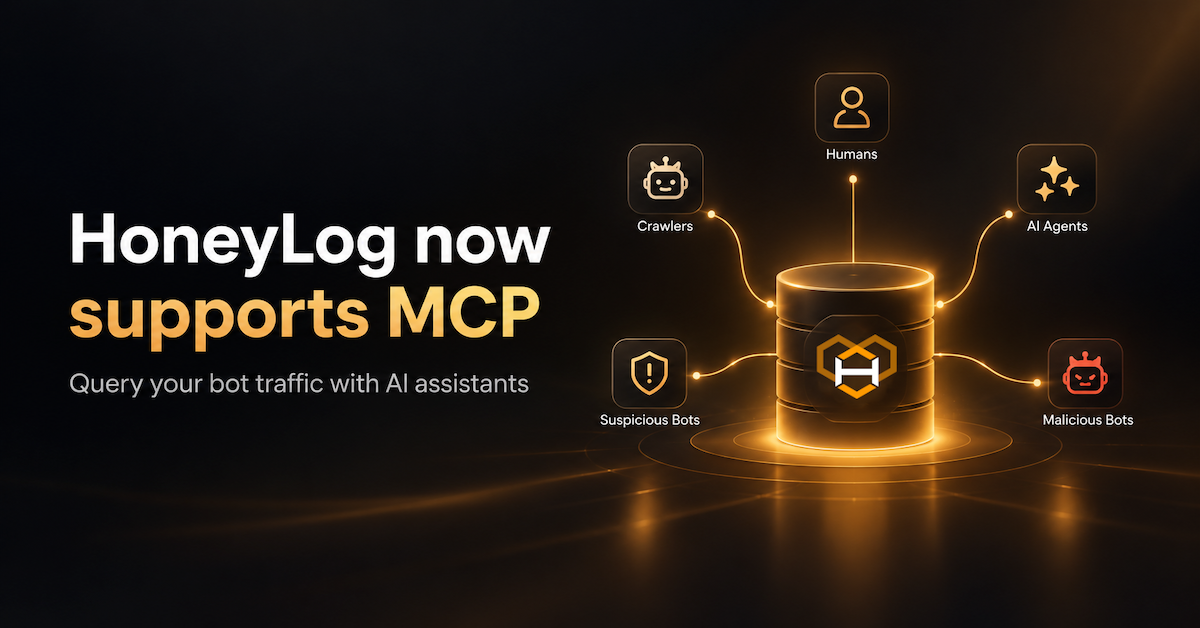
HoneyLog now supports MCP: query your bot traffic from ChatGPT, Claude, Cursor and more
Your server logs contain answers. Now you can simply ask for them.

HoneyLog vs. Botscorner: B2B Visitor ID vs. AI Traffic Intelligence
Botscorner identifies the B2B companies behind your bot traffic for sales and licensing. HoneyLog cl...

HoneyLog vs. Splunk: Purpose-Built vs. Build It Yourself
You can analyze AI traffic in Splunk if you build and maintain the detection yourself. Here's what t...
HoneyLog vs. DataDome: Protection vs. AI Access Intelligence
DataDome blocks malicious bots and verifies AI agents in real time. HoneyLog measures AI access inde...
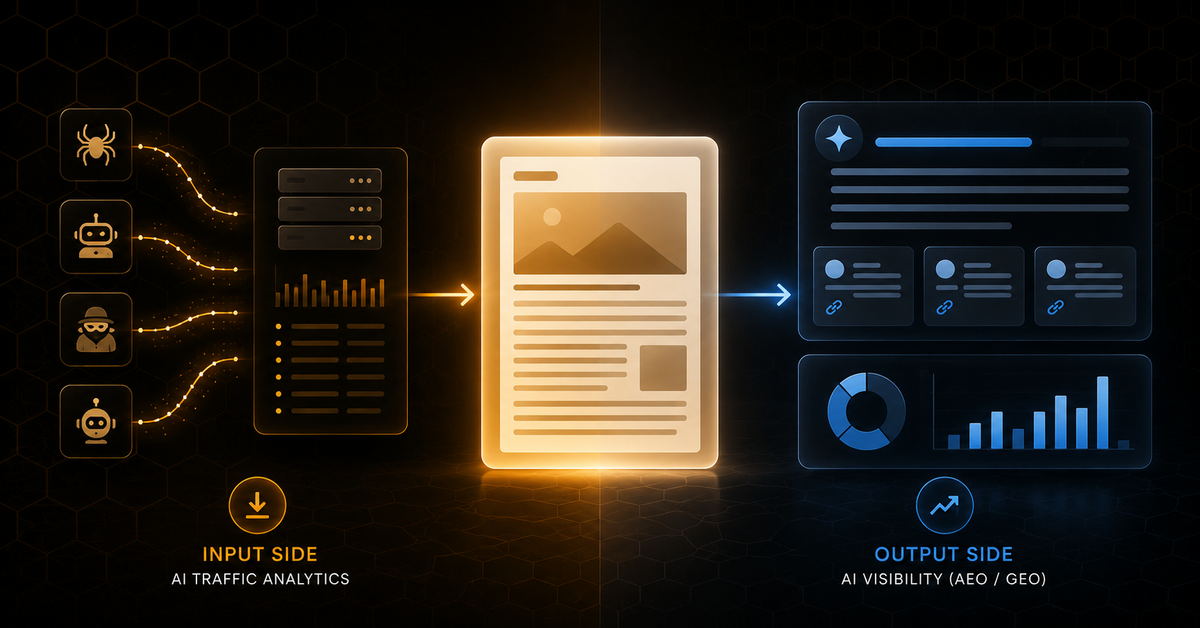
Crawler vs. Scraper vs. Agent: A Field Guide to AI Bots
Crawler, scraper, agent, they're not the same, and the difference decides what to do about each. A p...
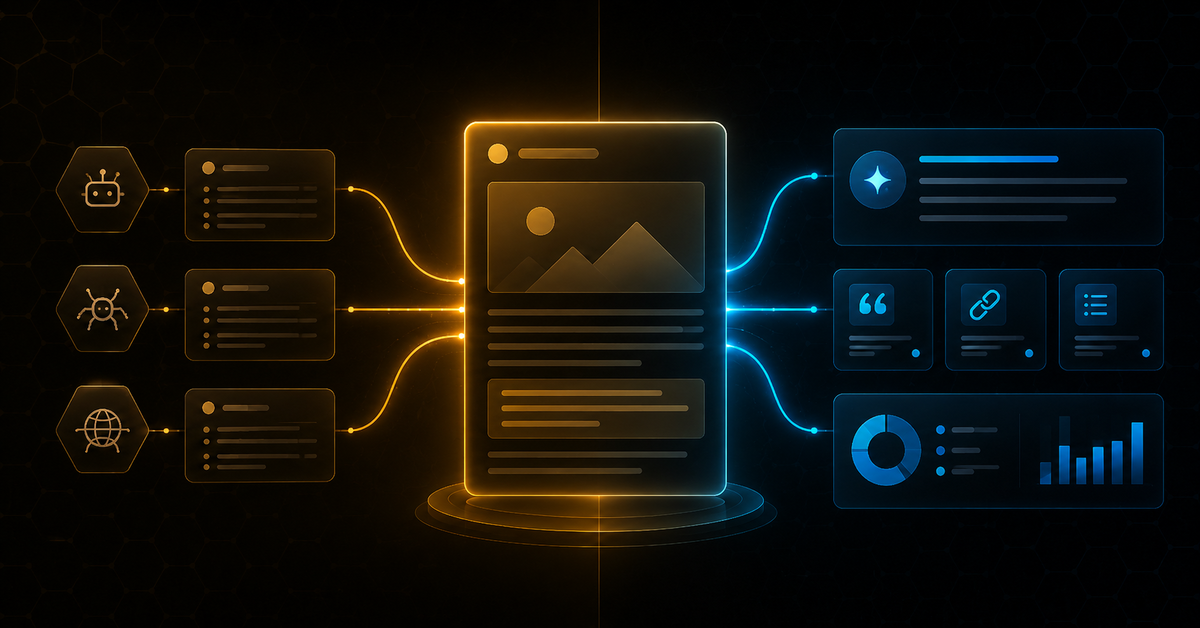
AI Visibility vs. AI Traffic Analytics: Two Halves of a Problem
AI visibility tools show how you appear in AI answers. AI traffic analytics show what's being taken...
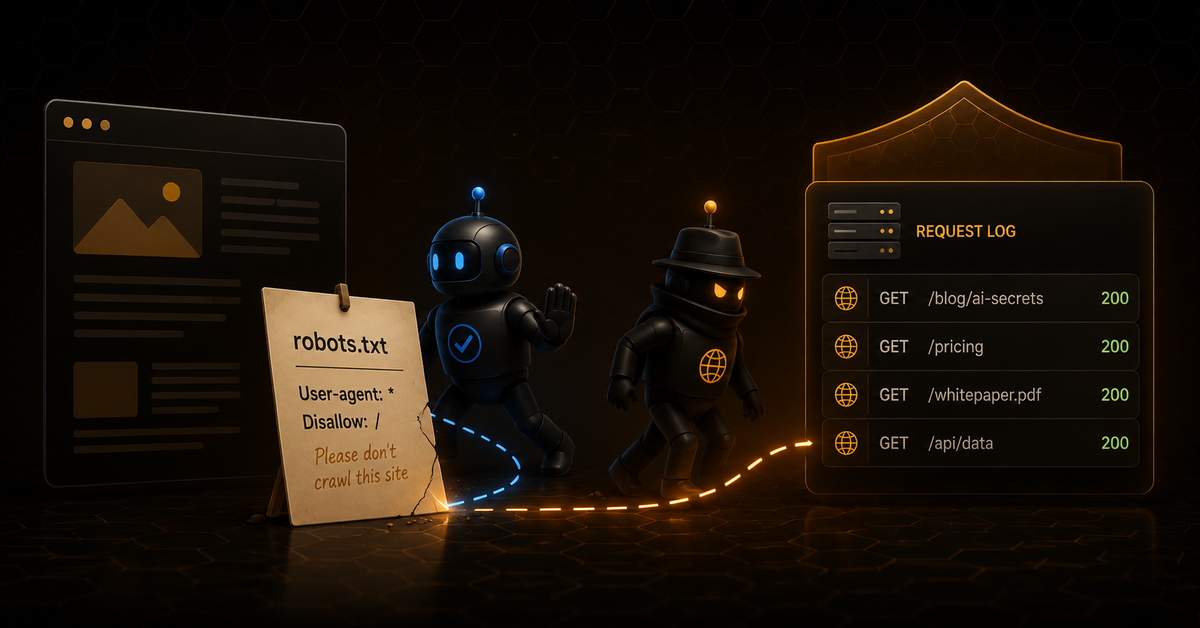
Why robots.txt Won't Protect Your Content from AI
Disallowing AI bots in robots.txt feels like protection. It isn't, as it is a request a growing shar...
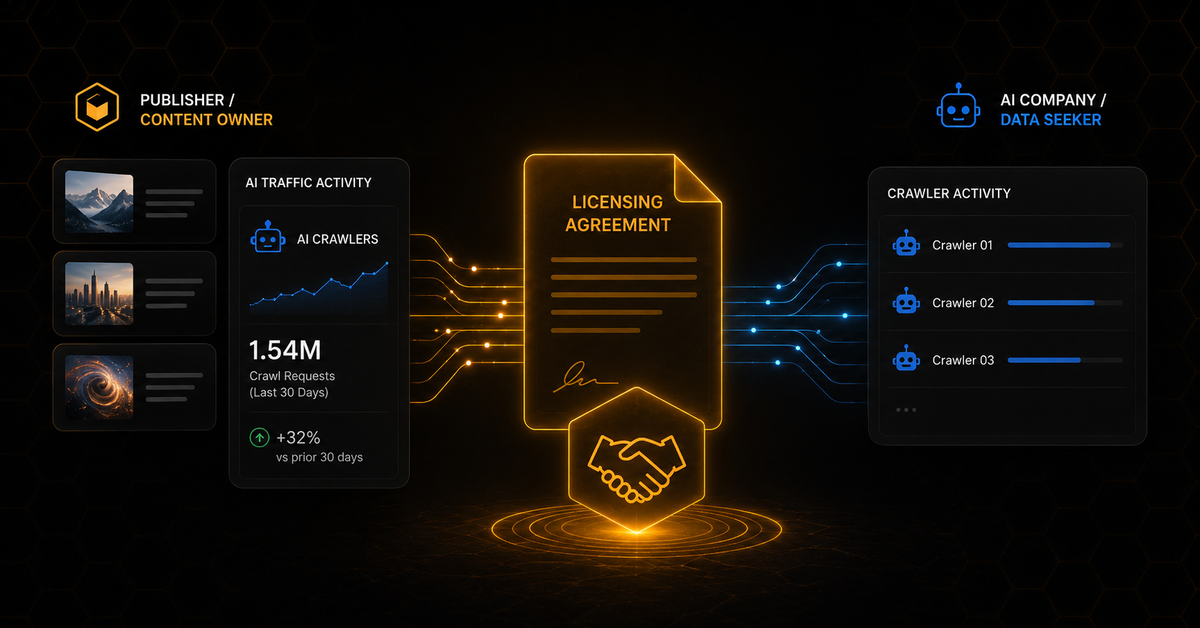
What Your AI Traffic Data Is Worth in a Licensing Negotiation
Publishers are signing AI licensing deals, but you can't value what you can't measure. Here's how yo...
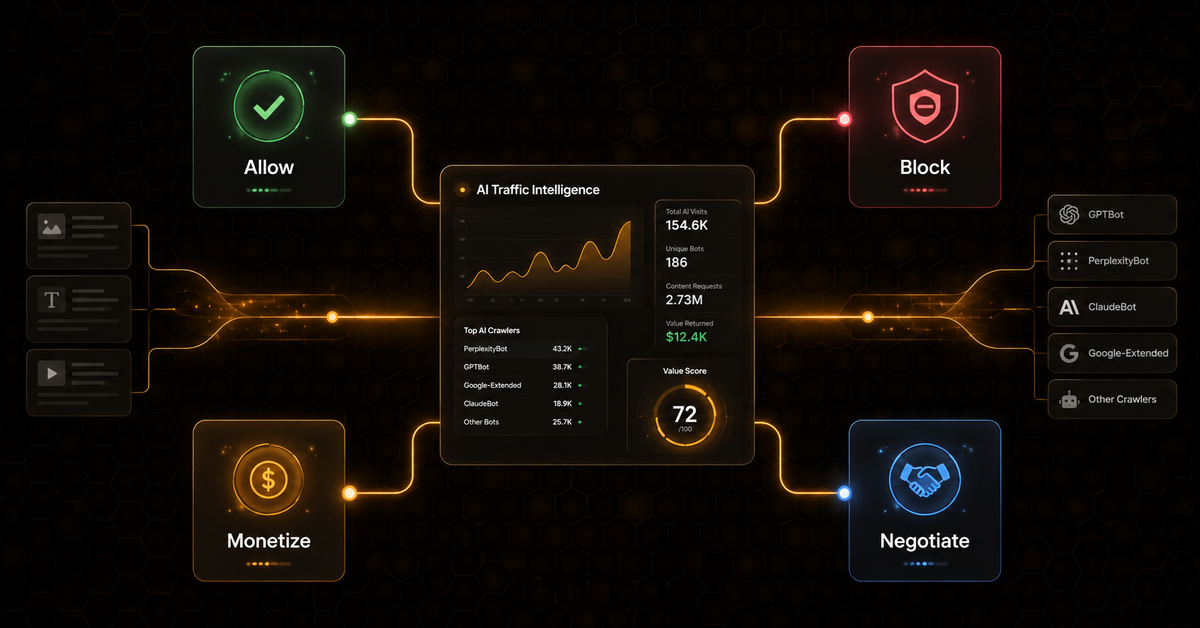
Block, Negotiate, or Monetize: A Framework for AI Traffic
AI crawlers are hitting your content right now. Should you block, charge, negotiate, or allow them?...
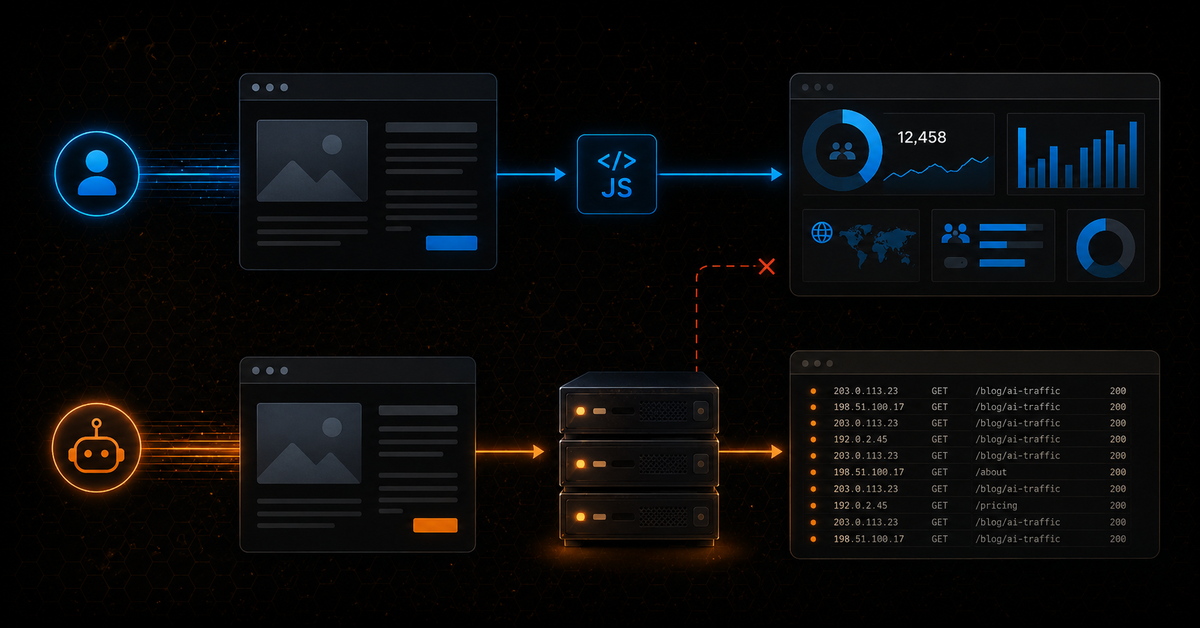
The AI Traffic Your Analytics Can't See, and Why It Matters
AI crawlers, scrapers, and agents are now a huge share of traffic to your content, and conventional...
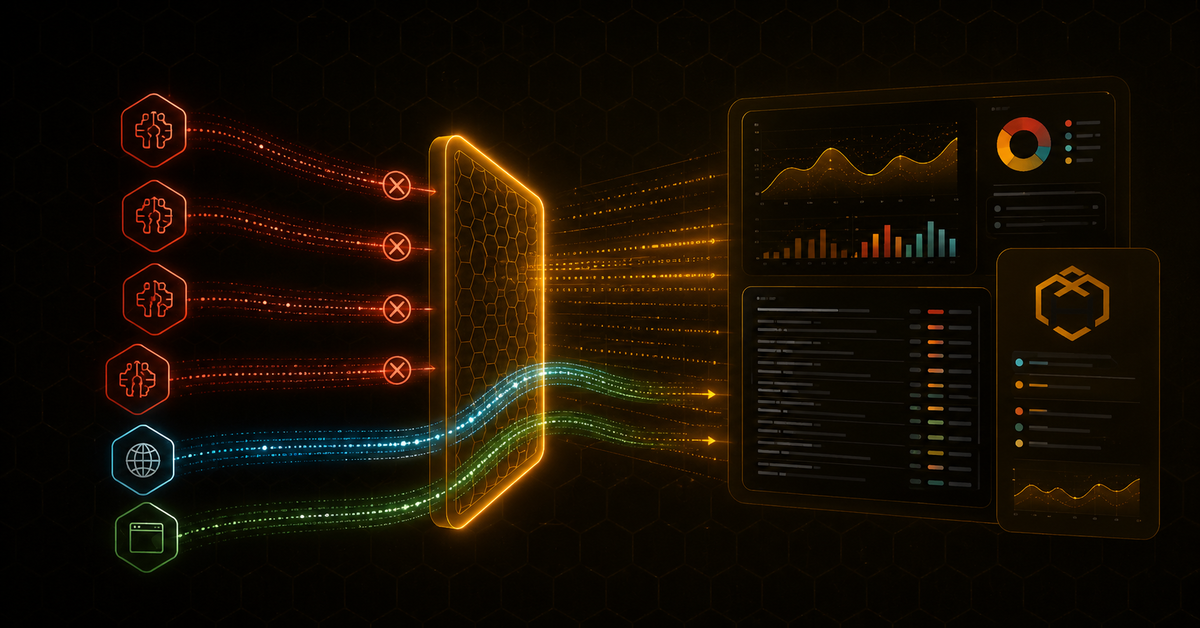
Cloudflare Blocks AI Bots by Default. Why Measure Them?
Blocking AI crawlers by default feels like a solved problem. It isn't. Here's what default blocking...
HoneyLog vs. Cloudflare: Block AI Bots or Understand Them?
Cloudflare blocks AI crawlers at the edge. HoneyLog measures them at your origin. Here's how the two...